Oct 21, 2026How to art
Decorative Storage or Pure Decoration: Know the Difference
Tell decorative storage from display-only decor. Check usable capacity, access, stability, and purpose before choosing metal containers or cork holders.
Decorative Storage or Pure Decoration: Know the Difference
Decorative storage should do two jobs: look appealing and keep something organized. Pure decoration has a different purpose. Its value may come from shape, color, craftsmanship, or personal meaning, without offering useful storage space.
Neither is automatically better. The important distinction is whether the product performs the job you expect from it.
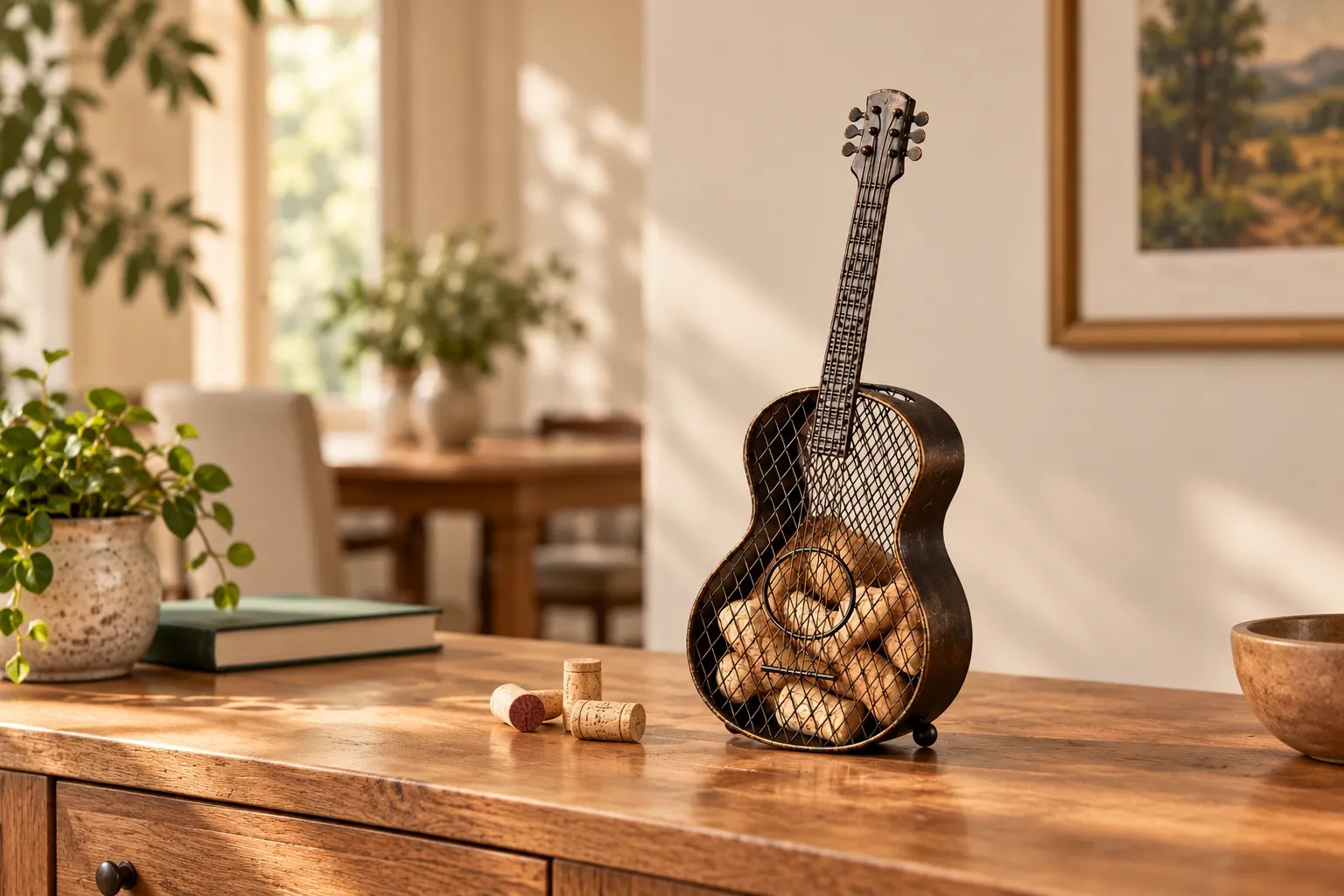
A guitar-shaped wine cork holder is a useful example: it can express a love of music while displaying a cork collection. Its usefulness still depends on access, capacity, stability, and cleaning.
Ask What the Object Is Designed to Hold
Start with a specific item, not the idea of “more storage.” A container for corks has different requirements from one for keys, fabric, food, or wine bottles.
Product | Intended role to confirm | What not to assume |
|---|---|---|
Wine cork holder | Collecting and displaying loose corks | Support for full wine bottles |
Decorative wall hooks | Holding specified hanging items | An unlimited or universal load rating |
Openwork container | Storing items of a suitable size | Containment of tiny objects |
Sculptural ornament | Visual interest | A usable compartment or load-bearing function |
Bottle holder | Supporting compatible bottles | Controlled wine preservation |
If the intended function is unclear, ask the supplier before using the object as storage.
Look Beyond External Dimensions
A decorative container can appear large while providing a much smaller usable interior.
The guitar design pictured with this article has a long neck, shaped body, and wire-mesh front. Those features define its appearance, but only part of the overall form accommodates corks.
When comparing decorative metal storage, check:
- The size and position of the usable opening.
- The interior space, not just total height.
- Any narrow areas where items may become trapped.
- The gaps in wire or openwork sections.
- The method for removing the contents.
Filling and Emptying Are Equally Important
A small opening may make it easy to add one cork at a time but less convenient to empty the collection. The photograph alone does not show whether there is a removable panel or another access point.
Request a rear view or an operation photograph. Avoid forcing objects through decorative mesh or modifying the container to create access without appropriate advice.
Match Openwork to the Contents
Wire and welded strip structures can make metal storage containers feel visually lighter. They also leave the contents visible.
That suits a curated cork collection, where repeated shapes become part of the display. Mixed receipts, cables, or small loose items may look untidy or escape through openings.
For wine cork storage, keep the collection clean and dry. Check that the container can be emptied and cleaned according to its care instructions.
Do not assume a decorative vessel is suitable for direct food contact simply because it is used in a kitchen or dining room.
Check Stability and Everyday Access
Functional home decor should remain convenient when in use.
For a freestanding container, ask whether it stays stable as the contents change. Keep it on an appropriate surface away from busy edges, and check the underside for potential furniture damage.
For wall-mounted storage, confirm the product’s load guidance and suitable fixing method. IKEA’s wall-fixing guidance illustrates the general need to match fixings with wall materials; follow the instructions for the actual product.
Decorative details should not make normal use awkward. If an object must be moved repeatedly to open a drawer, its position needs reconsidering.
Decide Whether the Contents Improve the Design
Sculptural storage exposes a useful design question: does the object look good while doing its job?
A guitar wine cork holder can suit a listening room, dining sideboard, or home bar where music and entertaining have a personal connection. A plain background helps the neck and body remain readable.
Leave enough space around it to appreciate the silhouette and access the opening. Surrounding it with multiple unrelated novelty objects may weaken both the storage function and the visual effect.
Know When Pure Decoration Is the Better Choice
An empty surface does not always need another organizer. If you have no defined item to store, a sculpture may provide the visual interest you want with fewer functional compromises.
Likewise, if you need to hide a large amount of everyday clutter, a closed cabinet may work better than an open decorative container.
Decorative storage containers are most useful when the contents, access, and placement all have a clear purpose.
Choose With One Simple Test
Before buying, ask: “What will I put in it, how will I take it out, and where will it stand?”
If those answers are clear, decorative storage can combine organization with personality. If the appeal is purely visual, choose it as decoration and enjoy it for that role.
For product details, contact Mloarts about container openings and dimensions. A clear function is what makes a decorative object useful day to day.
21:36