Oct 21, 2026How to art
Choosing a Garden Statue That Fits a Small Border
Choose a garden statue for a small border without crowding plants. Plan its footprint, viewing angle, color, stability, and outdoor care requirements.
Choosing a Garden Statue That Fits a Small Border
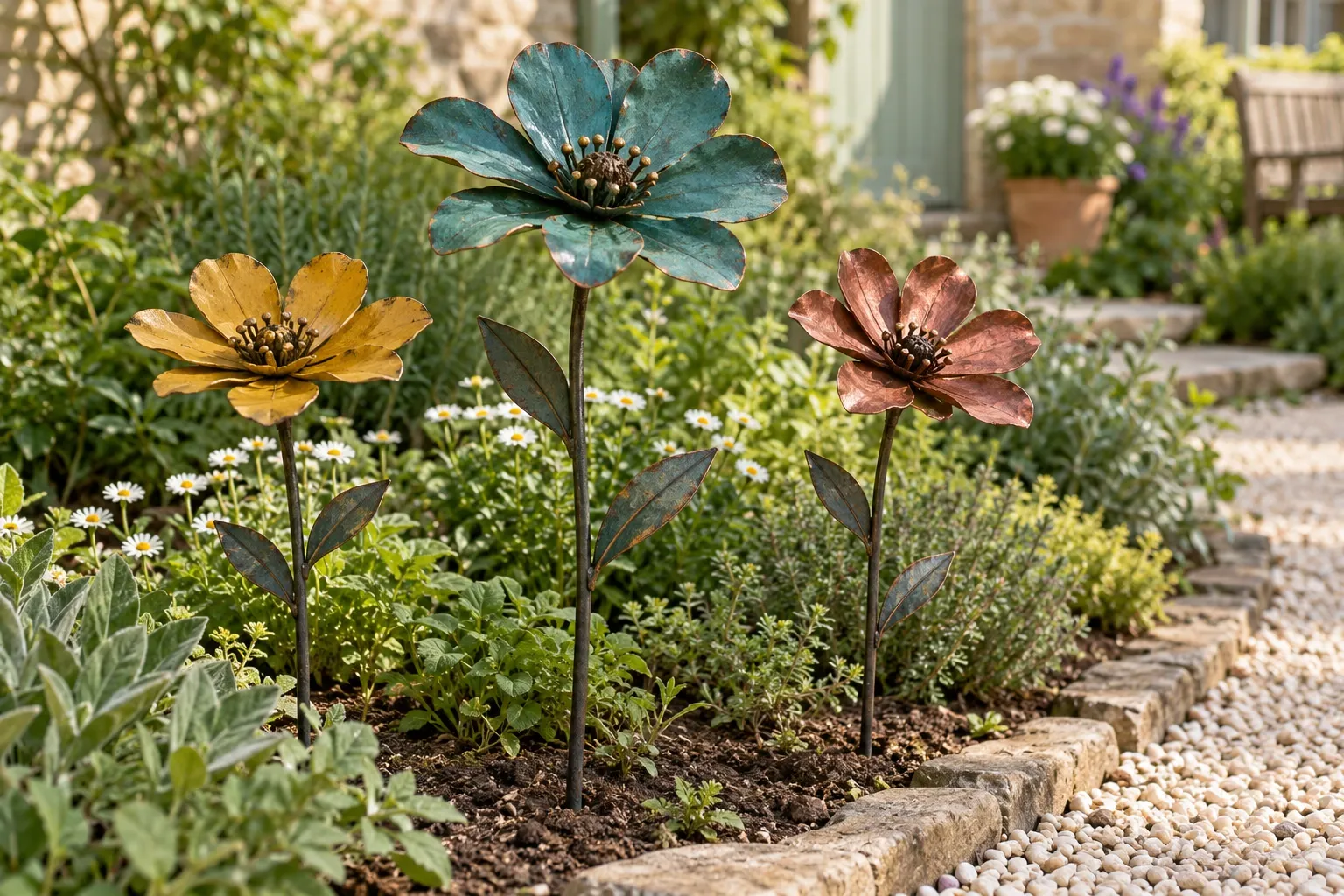
Colorful metal yard art can give a small border a memorable focal point. But limited space makes proportion important: the sculpture needs room to stand, the plants need room to grow, and the path still needs to function.
The answer is not always the smallest ornament. It is a piece with a clear position, a suitable footprint, and a silhouette that remains visible among the planting.
Measure the Space the Statue Can Actually Use
Start with the border’s depth and the available ground area, excluding the path and the space needed for plant growth or maintenance.
Record:
- The statue’s complete width, depth, and height.
- Its base or fixing footprint.
- The nearest plants’ expected mature spread.
- Access needed for watering and pruning.
- The main viewing position.
The RHS guide to planning a garden border considers plant size, color, and growing conditions. These factors also help you avoid placing decorative metal yard art where it will quickly become hidden.
Choose a Shape With a Clear Outline
Large metal yard sculptures can overwhelm a narrow strip, but very small figures may disappear beneath leaves. A moderately sized design with a readable outline can be easier to place.
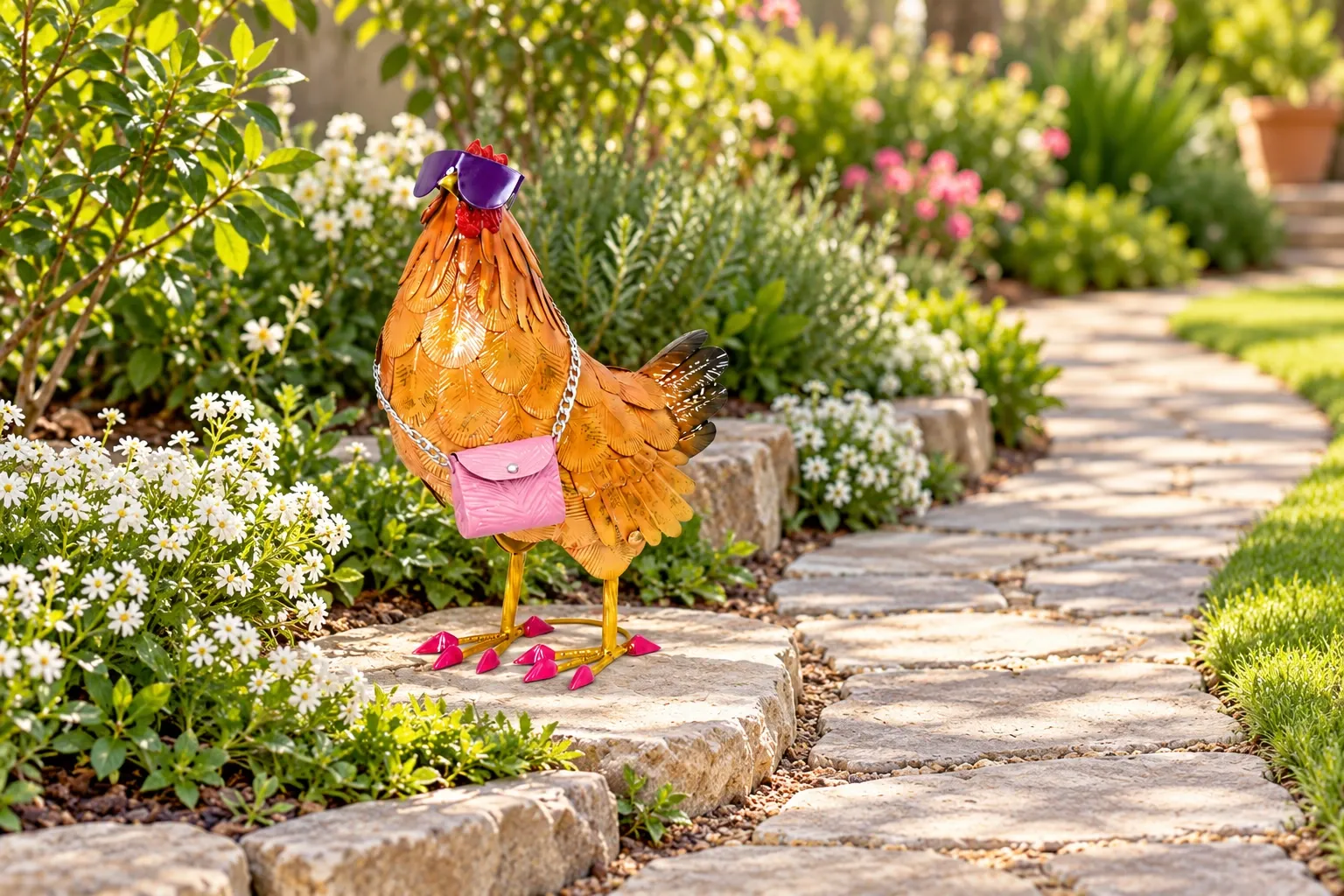
The hen pictured with this article is visually distinctive: a warm-colored body, purple sunglasses, and a pink handbag create a humorous character. Its projecting accessories and tail still need to be included in the width assessment.
Keep the Character Visible
For an animal figure, avoid hiding the face or other expressive details behind taller stems. Let lower planting soften the surrounding area without covering the features that make the piece recognizable.
Keep the whole silhouette in mind rather than positioning only the feet and hoping the upper body fits later.
Pick One Main Viewing Angle
A small border may be seen mostly from a kitchen window, a patio chair, or the entrance path. Choose the dominant view before arranging the statue.
Turn the sculpture to make the face and important details visible from that position. Check that the tail or accessories do not project into a walkway.
If the border is viewed from several sides, request side and rear product photos before buying. A strong front view does not guarantee the same effect from every angle.
Use Color Without Overcrowding
A small area can feel busy when bright flowers, patterned pots, and several ornaments compete.
Sculpture feature | A background to test |
|---|---|
Orange or gold-colored body | Green foliage or pale stone |
Pink decorative detail | Restrained planting with a small repeated pink accent |
Dark outline | Light gravel, pale flowers, or a plain backdrop |
Multiple painted colors | Simple pots and a limited nearby palette |
You do not need matching flowers for every painted detail. One repeated color is often enough to connect the statue to the border.
Confirm Support and Outdoor Suitability
A metal lawn ornament may need a different securing method on soil than on paving. Confirm how the actual product should be installed and whether suitable parts are provided.
Do not assume a broad-looking body or low position guarantees stability. Wind exposure, construction, and the supporting surface all matter.
Ask about the material, protective treatment, drainage, intended environment, and care instructions. A garden photograph illustrates a possible setting; it does not prove resistance to rain, sunlight, or coastal conditions.
Keep Maintenance Access Clear
Place metal sculptures for yard use where you can still reach the plants and check the sculpture’s support. Avoid sprinkler positions that repeatedly wet the piece unless suitable for its finish.
Seasonal plant growth may require repositioning. Follow the installation instructions each time rather than treating the first position as permanent.
Static Sculpture or Moving Garden Art?
In a compact border, static garden metalwork can provide character without requiring a rotating envelope.
Garden wind sculptures need enough clearance for moving parts and appropriate installation conditions. Check those requirements separately before combining them with a fixed statue.
If you enjoy DIY metal yard art, do not assume a decorative piece can be drilled, welded, or repurposed without affecting its structure or protective finish. Seek appropriate product and fabrication advice before modification.
Give One Piece a Clear Role
Start with one focal sculpture, then assess whether the border needs anything else. Extra ornaments should have a clear relationship rather than simply occupy remaining gaps.
A statue fits a small border when its character remains visible, the plants can develop, and the area stays comfortable to maintain.