Oct 20, 2026How to art
How to Choose Metal Wall Art That Fits Your Wall
Choose metal wall art that fits your wall, furniture, and style. Explore sizing, colorful welded iron details, lighting, mounting, and outdoor suitability.
How to Choose Metal Wall Art That Fits Your Wall
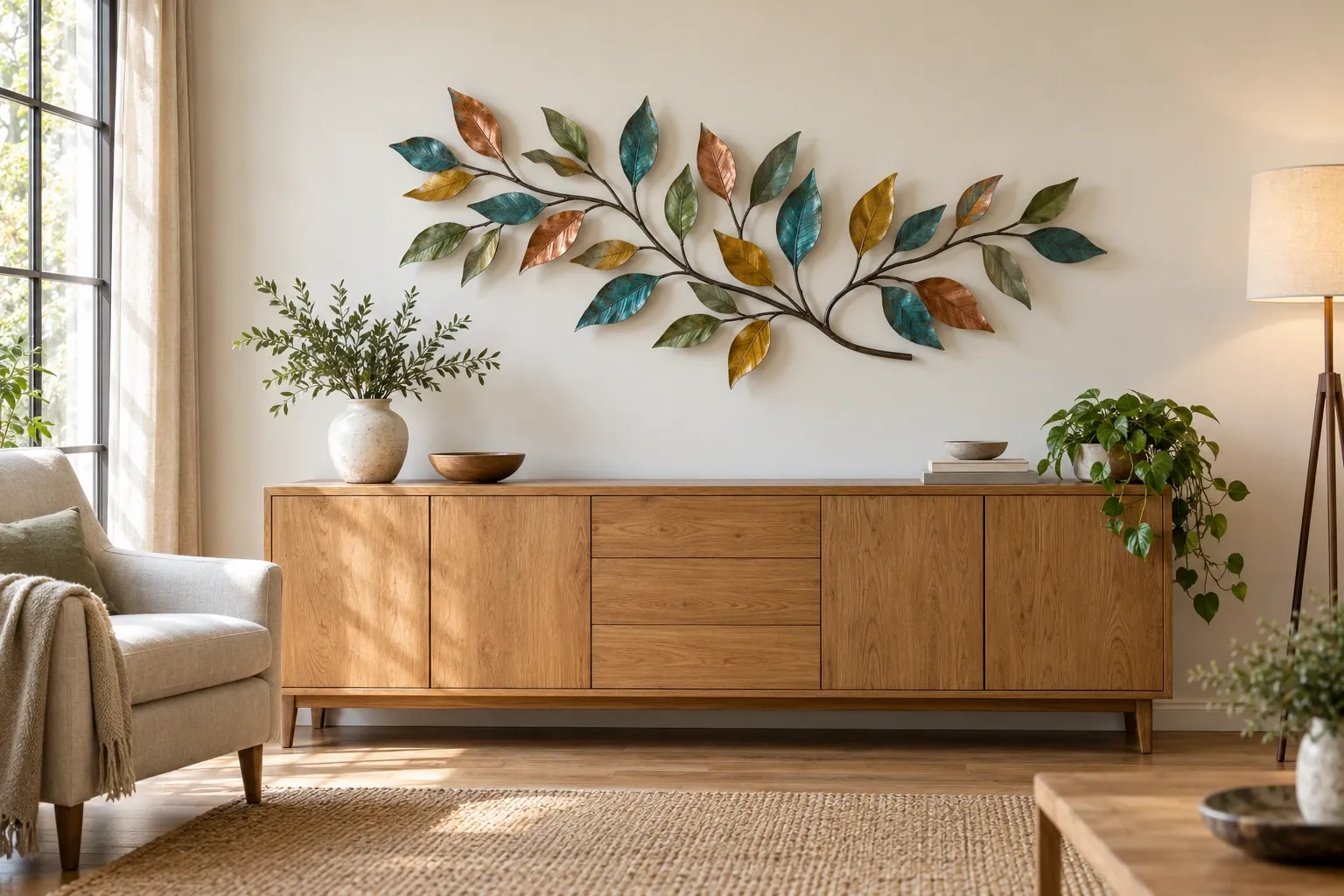
The right metal wall art should feel connected to the room. Its size, shape, colors, and depth need to work with the wall, the furniture below, and the way you move through the space.
A colorful sculpture made from cut and welded iron sheets brings another dimension to that decision. Individual leaves, curved edges, and layered details create shadows that change throughout the day.
Before choosing a design, start with the space it will occupy.
Measure the Usable Wall Space First
A wall’s full width is not necessarily the area available for artwork. Windows, doors, shelves, switches, and furniture all affect where a piece can comfortably sit.
Measure:
- The clear width and height of the intended display area.
- The width of the furniture beneath it.
- The position of nearby lights, shelves, and door openings.
- Any clearance needed for projecting metal details.
For US buyers, keeping measurements in both inches and centimeters makes international product comparisons easier. UK, European, and Australian shoppers should also check which unit the seller uses.
Use Furniture as a Visual Reference
For living room wall art above a sofa or sideboard, try an artwork width around one-half to two-thirds of the furniture width as an initial layout test.
For example, above a 180 cm—or approximately 71-inch—sideboard, you could test a paper outline about 90–120 cm wide.
This is a styling starting point, not a rule. An airy branch design may need more width than a dense panel to create a similar visual presence.
Leave enough space above the furniture for lamps, vases, and everyday use.
Test the Size With a Paper Template
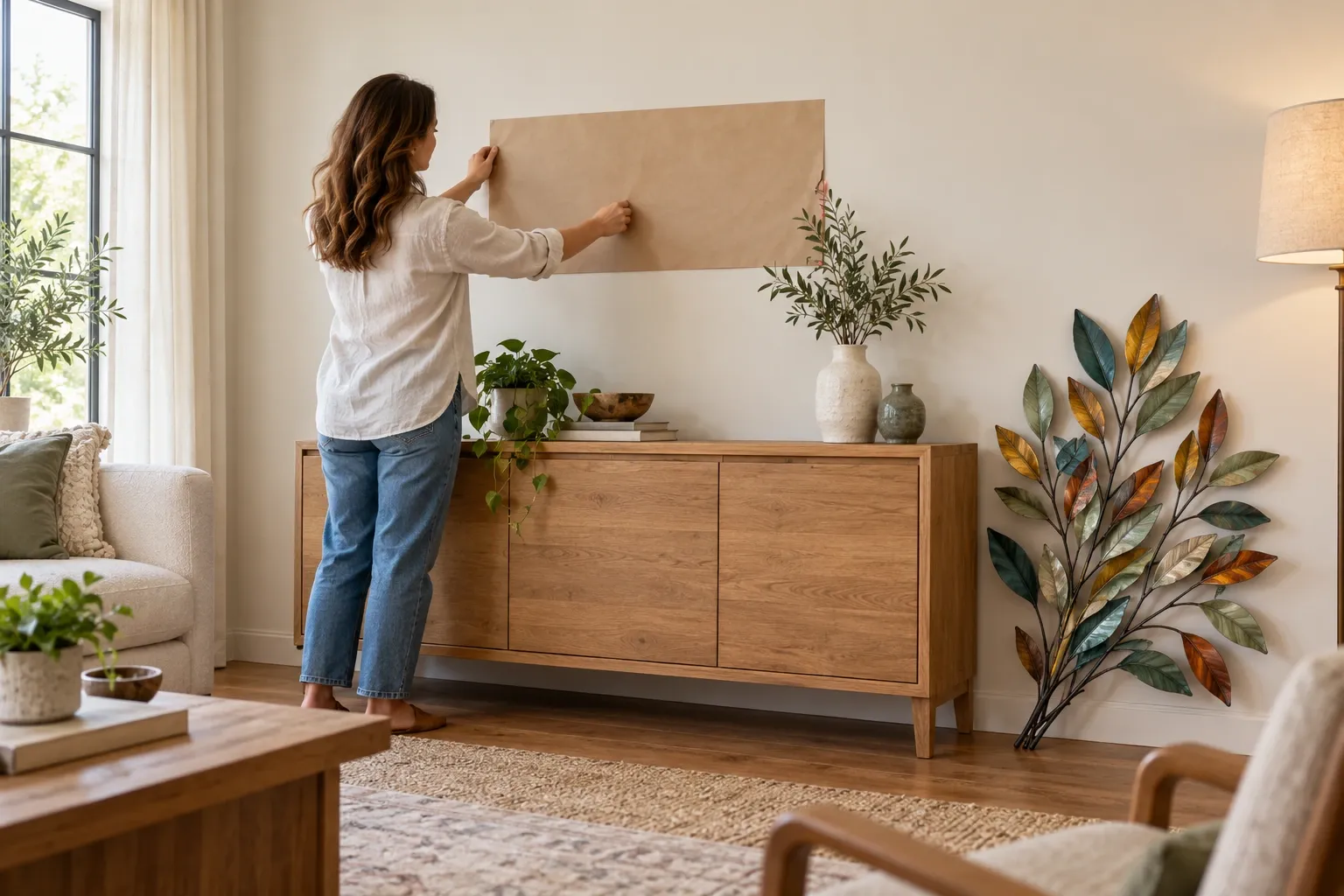
Cut paper to the artwork’s overall dimensions and hold it against the wall. If using removable tape, check that it is suitable for the wall finish first.
View the outline from the doorway, your usual seat, and the opposite side of the room.
Ask yourself:
- Does it look connected to the furniture?
- Is there comfortable empty space around it?
- Will plants or accessories hide important details?
- Does the position work when viewed while seated?
A template tests size and placement. It does not establish whether the wall can support the artwork.
Match the Shape to the Wall
The shape of metal wall decor can be as important as its dimensions.
Wall or furniture arrangement | Shape to explore |
|---|---|
Wide wall above a sofa | Horizontal branches or a broad composition |
Narrow space beside a doorway | A vertical design with limited projection |
Compact reading corner | One smaller, clearly defined accent |
Large, open wall | A substantial piece or a carefully spaced group |
Wall above a low console | A composition balanced with the console and accessories |
Avoid filling every available inch. Empty space helps the outline remain readable, particularly when the design includes many individual metal elements.
Look Closely at the Welded Iron Details
Handcrafted sheet-iron wall art has a different character from a flat print or a solid cast object.
Cut iron shapes can be bent, overlapped, and welded to supporting stems or frames. The result may combine painted surfaces, open spaces, and shallow relief.
Check Construction as Well as Appearance
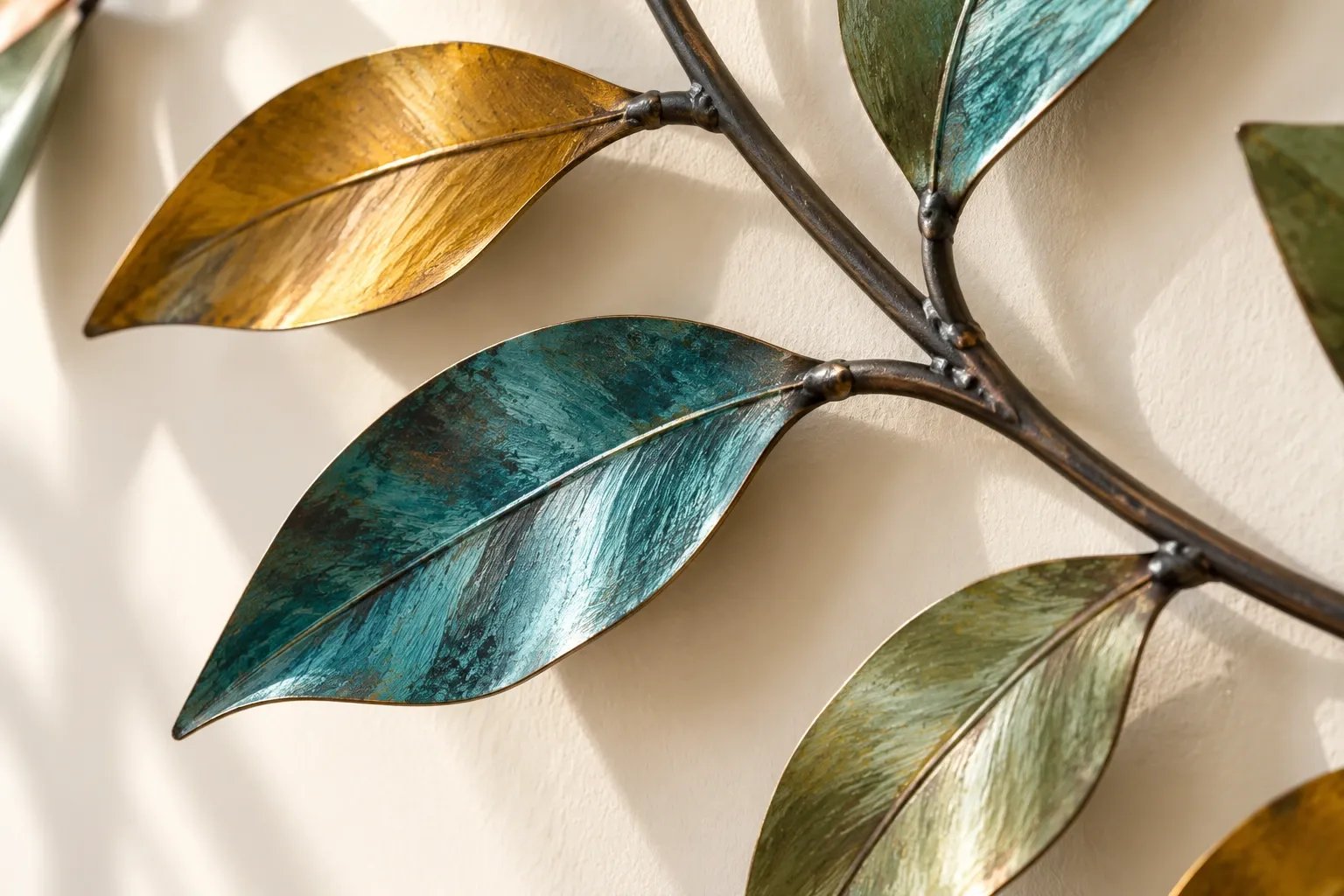
When comparing metal artwork, request photographs showing:
- Thin sheet edges and formed details.
- Connections between decorative elements and their supports.
- The back of the piece and its mounting points.
- Side views showing depth.
- Close-ups of the painted finish.
Small variations can contribute to a handmade appearance. Loose parts, sharp exposed edges, or damaged hanging points still need attention.
A photograph can illustrate the style, but it cannot establish material grade, weld strength, or installation requirements.
Decide How Much Texture the Room Needs
Layered metal art introduces movement and shadow. It can work well against a plain wall where the details have room to stand out.
Wood wall art may appeal when visible grain and a warmer material texture suit the space. Painted iron offers another direction: curved sheet forms, defined silhouettes, and colorful accents.
Choose according to the room’s existing materials rather than assuming one medium suits every interior.
Choose Colors That Connect With the Room
Colorful wall art decor works best when at least one shade connects with something already present.
Teal leaves might echo a cushion. Sage green can relate to indoor plants. Copper or mustard accents can complement warm wood furniture.
You do not need to repeat every color.
Balance Metallic Accents With Painted Surfaces
Gold wall decor can introduce warmth, but a large reflective surface may feel more prominent than expected.
A painted iron design with a few gold-toned details offers a softer approach. Remember that “gold-toned” describes appearance; it does not identify the material or coating process.
For a metallic wall decor scheme, balance reflective accents with matte paint, linen, wood, or ceramics.
Mloarts’ blue leaf metal wall art and green leaf metal wall art offer color directions to explore. Confirm their current dimensions, construction, and intended use before selecting a piece.
Check Daylight and Your Living Room Lamp
Raised details cast shadows, while glossy surfaces reflect nearby light. Both can change how an artwork appears.
Before choosing a lamp for living room lighting, consider its position relative to the wall display. Light from the side can reveal depth; a strong exposed bulb may create distracting reflections.
Check the proposed position in daylight and after dark. Also allow space so a lampshade does not hide the artwork or touch projecting details.
Confirm the Mounting Requirements
A piece that fits visually must also suit the installation conditions.
Confirm the artwork’s actual weight, mounting points, required fixings, and supplied hardware. Drywall, plaster, brick, and concrete can require different approaches.
IKEA’s guidance on wall fixings explains the general importance of matching fixing devices to wall materials. For your artwork, follow its own installation instructions and obtain advice if the wall or fixing requirements are unclear.
Do not assume that adhesive hooks suit a piece simply because it looks lightweight.
Choosing Outdoor Metal Wall Art Requires Extra Checks
An attractive indoor piece is not automatically suitable as outdoor wall decor.
When choosing outdoor wall art, ask about the specific material, protective finish, exposure limits, mounting method, and care requirements.
For wall art for exterior spaces, assess the actual location:
- Is it sheltered or exposed to rain?
- Will irrigation regularly wet the surface?
- Is it near the coast?
- Will it receive prolonged direct sun?
- Can water collect around joints or behind the piece?
Outdoor metal wall art needs product-specific suitability information. A covered Australian alfresco area, a rainy UK courtyard, and an exposed coastal wall can present different conditions.
If outdoor use is not confirmed, choose an indoor position.
A Final Checklist Before Buying
Before ordering, confirm that:
- The width, height, and depth fit the intended position.
- The shape works with the furniture and nearby objects.
- The colors connect with the room.
- Daylight and lamps reveal the design comfortably.
- The weight and mounting requirements are clear.
- The intended environment matches the product guidance.
Explore Mloarts’ metal wall art collection, then contact Mloarts about sizes and finishes for the details you need.
Well-chosen metal wall art brings proportion, color, and character together—giving the wall a focal point that feels at home.