
Oct 20, 2026How to art
How to Choose a Metal Wine Rack for Your Home
Choose a metal wine rack that fits your bottles, space, and style. Compare countertop and wall-mounted designs, capacity, stability, and wine storage needs.
How to Choose a Metal Wine Rack for Your Home
A wine rack should fit more than an empty corner. It needs to accommodate your bottles, make them easy to reach, and work with the way you use your home.
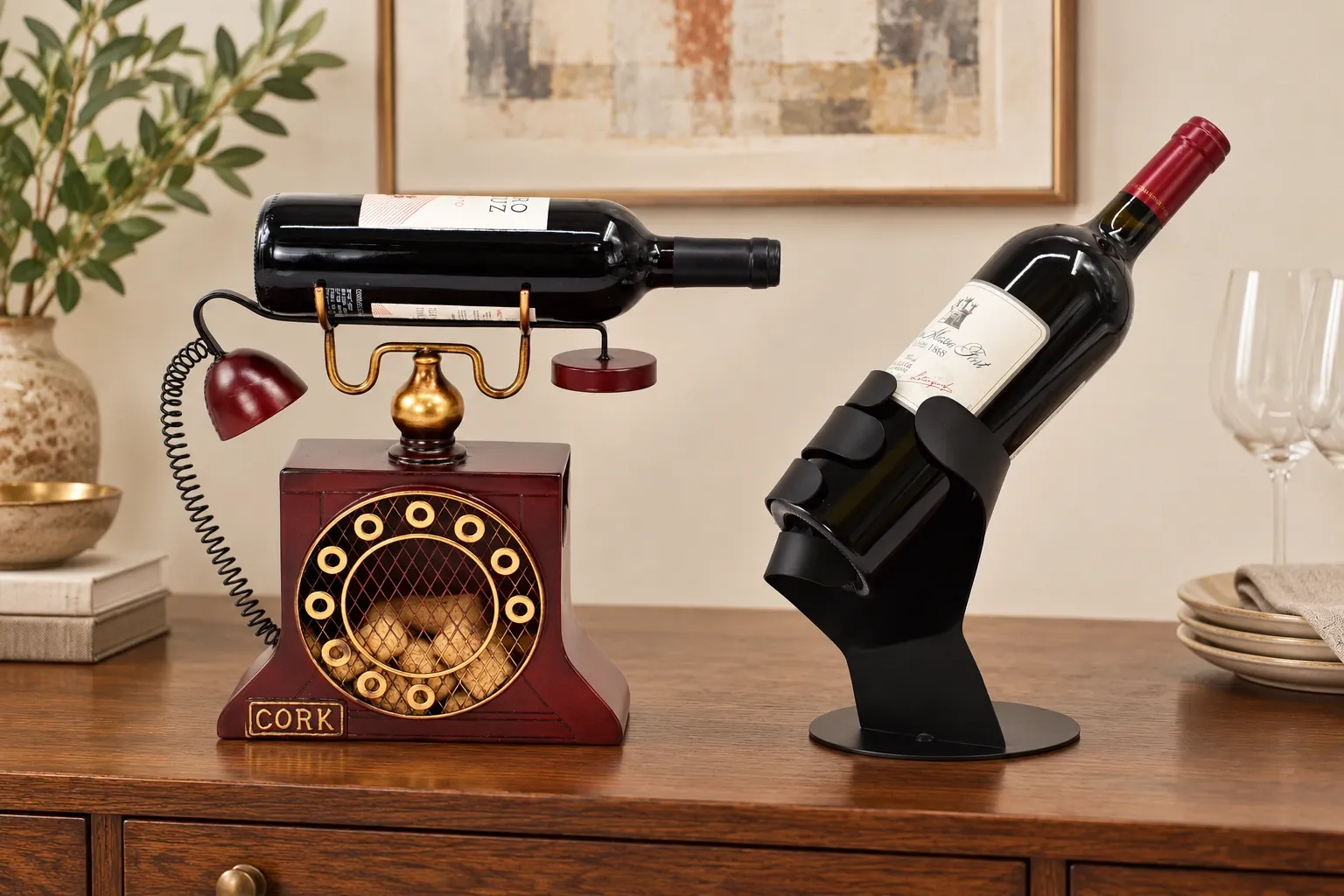
A small countertop design might suit a few bottles for upcoming dinners. A wall-mounted rack can free up furniture space. A decorative wine bottle holder can turn one bottle into a personal display.
Before choosing a metal design, consider five things: purpose, dimensions, bottle compatibility, stability, and style.
Start With Your Wine Storage Needs
First, decide whether you want to display bottles, organize wines you plan to enjoy soon, or keep a collection for longer-term aging.
These are different requirements.
An open rack provides physical support and organization. It does not control temperature, humidity, or light exposure.
EuroCave’s wine storage guidance explains why environmental conditions matter when keeping wine over time. Choosing a suitable rack is only one part of that decision.
Wine Rack, Wine Cabinet, or Small Wine Fridge?
Option | Main purpose | What to confirm |
|---|---|---|
Open wine rack | Organizing and displaying bottles | Bottle fit, location, capacity, and stability |
Decorative wine holder | Presenting one or a few bottles | Support points and compatible bottle shapes |
Non-refrigerated wine cabinet | Combining storage with furniture | Internal dimensions, access, and room conditions |
Small wine fridge | Controlled cooling within its specifications | Temperature range, ventilation, capacity, and installation type |
Wine cellar | Providing a dedicated storage space | Actual environmental conditions and suitable racking |
A product called a “wine cabinet” may be furniture or a refrigerated appliance. Read the description carefully.
If you are planning a wine fridge cabinet arrangement, use an appliance approved for the intended installation. Do not enclose a freestanding fridge unless its manufacturer permits it and the required clearances are maintained.
An ordinary cabinet does not become climate-controlled simply because it contains bottles.
Measure the Space Before Comparing Wine Racks
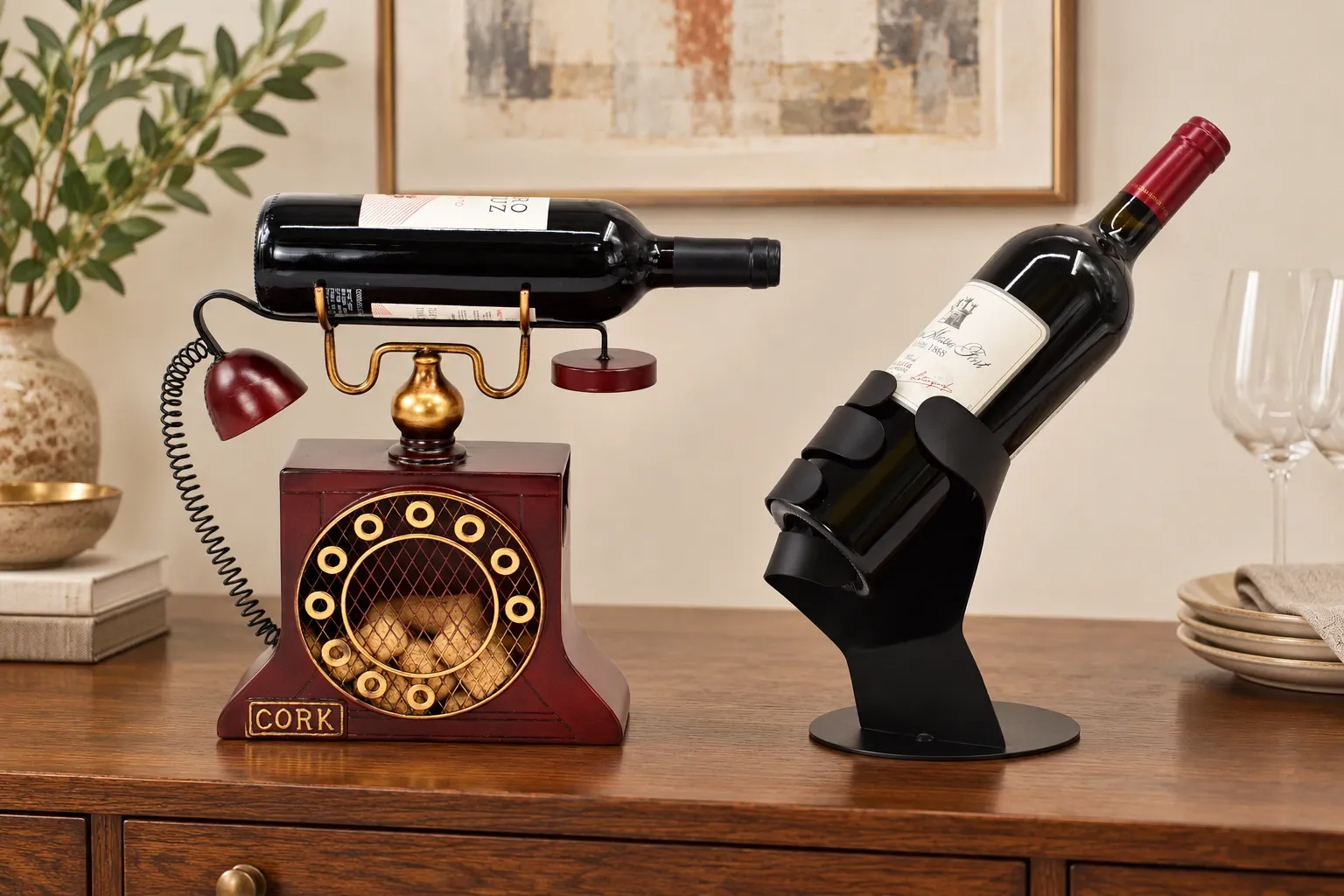
Record the available width, depth, and height. Then allow additional room for inserting and removing bottles.
The footprint of the empty rack may not include projecting bottle necks.
Check:
- The overall dimensions with bottles loaded.
- Clearance beneath shelves and cabinets.
- Space for your hand to grip each bottle.
- Nearby doors, drawers, and walkways.
- The supporting surface or wall requirements.
Keep measurements in both centimeters and inches when comparing international listings.
Choosing a Countertop Wine Rack
A countertop wine rack works well when you want a compact collection within comfortable reach.
Place it on a level, suitable surface with enough depth to support the loaded rack. Keep it away from busy edges and food-preparation areas where bottles could be knocked.
Ask whether the feet have protective pads and whether those pads suit your furniture finish.
A dining sideboard may offer a better position than a crowded kitchen counter, especially if it keeps the bottles away from cooking heat and direct sunlight.
Choosing a Wall Mounted Wine Rack
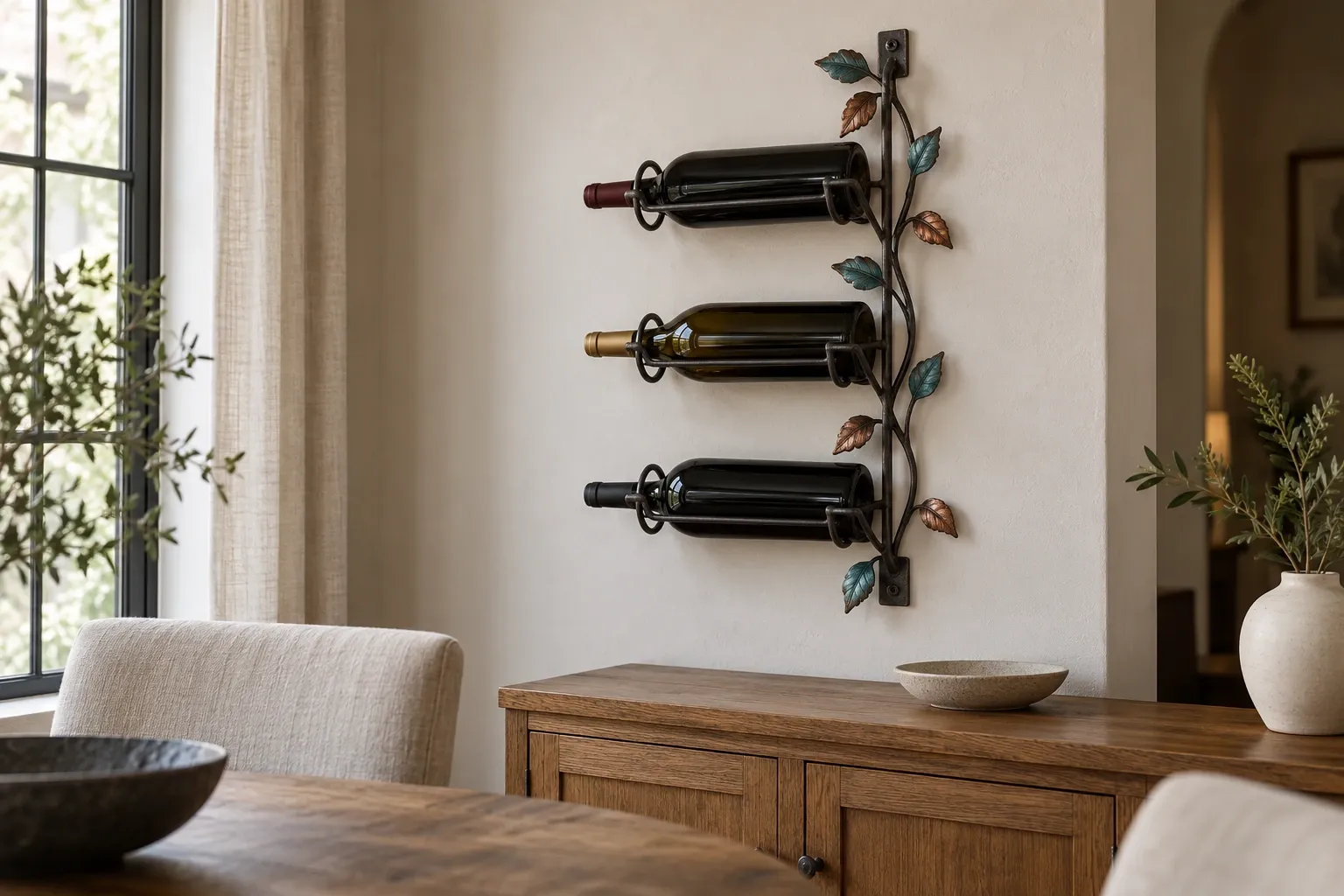
A wall mounted wine rack can preserve countertop space, but it needs appropriate mounting conditions.
Before buying a wall wine rack, confirm:
- The rack’s weight and loaded capacity.
- The number and position of mounting points.
- Suitable wall materials and required fixings.
- Whether hardware is included.
- Clearance for removing bottles.
- A mounting height that allows comfortable access.
Follow the product’s installation instructions. If the wall construction or fixing requirements are unclear, seek suitable installation advice.
A photograph showing bottles on a wall does not establish the capacity of your wall or fixings.
Check Bottle Fit Before Bottle Count
Two bottles marked 750 ml can have different diameters, lengths, and shoulder shapes.
A rack designed around straight-sided Bordeaux bottles may not accommodate wider Burgundy or Champagne bottles in every position.
Compare Your Actual Bottles With the Rack
Ask the seller about:
- Maximum bottle diameter and length.
- Spacing between adjacent bottles.
- Clearance above each slot.
- Support at the bottle body and neck.
- The bottle type used to calculate capacity.
If you keep mixed bottle shapes, request photographs or measurements demonstrating compatibility.
A nine-bottle rack may hold fewer than nine of your bottles if some are unusually wide. Easy access matters more than filling every available slot.
For a decorative wine holder, check the intended bottle position particularly carefully. Sculptural designs may support a bottle differently from a conventional horizontal rack.
Look for Stable, Practical Construction
Metal can create an open, visually light structure, but appearance alone does not establish strength.
Look for clear product information and useful close-up photographs.
For a freestanding or countertop design, check that the base sits flat and the rack remains stable during normal bottle removal.
For welded metal designs, inspect the joints, bottle-contact surfaces, and finish when the item arrives. Ask the supplier about loose connections, sharp edges, or bent supports before loading it.
Follow any assembly and loading instructions. Do not assume that racks can be stacked or connected unless the design specifically allows it.
Match the Wine Rack to Your Interior
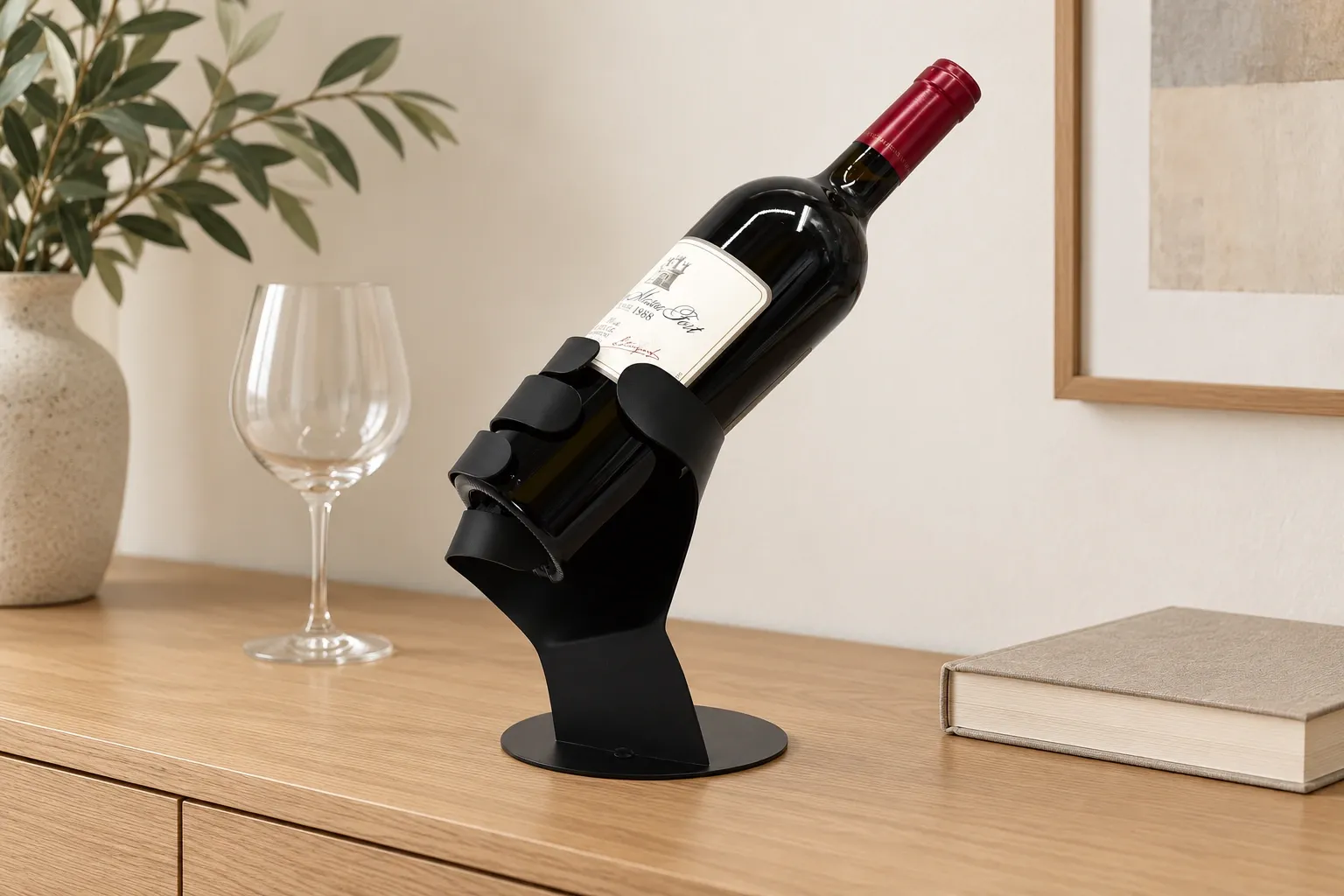
A rack becomes part of the room even when it is not full.
Dark metal can create definition against a pale wall. Open ironwork can complement wood furniture without adding a large solid object. Small colored details can connect the rack with nearby artwork or accessories.
Metal or Wood Wine Rack?
A wood wine rack introduces visible grain and can relate naturally to timber cabinetry. A wooden wine rack with broad components may also have a different visual presence from slender metal rods.
A metal rack can offer crisp lines, curved forms, or decorative motifs. Neither material automatically guarantees better storage.
Compare the actual construction, finish, bottle fit, and care requirements.
Choose Decorative Details With a Purpose
For a playful home bar, an animal-shaped wine bottle holder can express a personal interest. In a quieter dining room, a simple geometric rack may be easier to coordinate.
Mloarts’ metal wine rack collection offers designs to explore. For a more individual display, consider the cat metal wine bottle holder, checking current dimensions and bottle compatibility before ordering.
Leave enough empty space around the display so its shape remains clear.
Decide Whether a Wine Rack Cabinet Suits Your Routine
A wine rack cabinet can combine bottle storage with space for glasses and accessories.
Check the usable internal dimensions rather than relying on the cabinet’s overall size. Doors, hinges, shelves, and bottle necks can affect access.
If you already own a cabinet, confirm that any separate rack fits comfortably inside and that the furniture can support the intended load.
For refrigerated storage, assess the appliance separately. EuroCave’s comparison of regular refrigerators and wine fridges provides background on their different purposes.
Keep the Location in Mind
Avoid choosing a position solely because the rack looks attractive there.
Direct sun, cooking appliances, radiators, and substantial temperature changes can make a convenient display location unsuitable for keeping wine.
This applies whether you live in a US apartment, a UK dining room, a European flat, or an Australian open-plan home. The actual room conditions matter more than the country label.
For longer-term storage, evaluate whether your environment is suitable or whether you need an appropriate wine fridge or conditioned cellar.
Your Final Wine Rack Buying Checklist
Before ordering, confirm:
- Purpose: Display, everyday organization, or longer-term storage?
- Dimensions: Does the loaded rack fit with comfortable access?
- Bottle compatibility: Will your usual bottle shapes fit?
- Capacity: Is the stated count based on bottles you actually use?
- Stability: Are the base or mounting requirements clear?
- Location: Is it away from unsuitable heat and light exposure?
- Style: Does it complement the room without creating clutter?
The wine rack that suits your home is the one you can use comfortably—not simply the one with the highest bottle count.
Explore suitable designs, then contact Mloarts about wine rack sizes and specifications before making your selection.